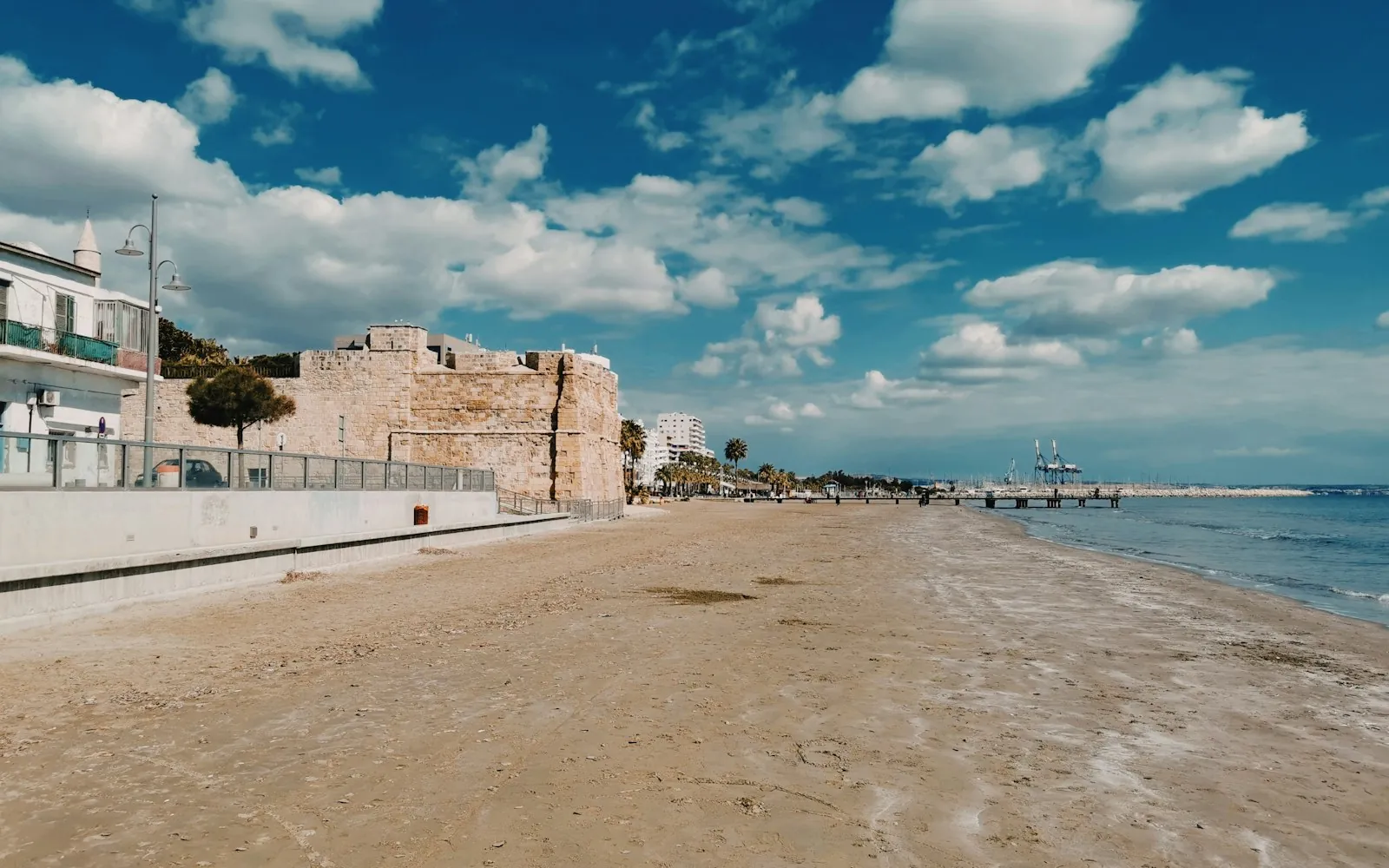
Larnaka Marathon 2026: tracking, the road back from Dhekelia and the Foinikoudes finish
15 November 2026, 06:55 start: the official app, live GPS, where to see them several times by the castle, and a voice cheer at km 30.
In this article
The Radisson Hotels Larnaka Marathon runs on Sunday 15 November 2026, starting at 06:55 on Foinikoudes, in front of Larnaka Town Hall (official marathon page). The course is flat and stays by the sea: out and back on the Larnaka–Dhekelia road, through the old town past the castle, a last leg towards the Salt Lake, and the finish back on Foinikoudes where it started. If someone you care about is running it, here's how to know where they are right now and how to get your voice to them when they need it.
Independence notice: Cheerlify is an independent service. It is not affiliated with the Radisson Hotels Larnaka Marathon organisers or sponsors, and it is not the event's official application.
The race at a glance
| Date | Sunday 15 November 2026 |
| Start | 06:55, Foinikoudes, in front of Larnaka Town Hall; the half marathon starts from the same place at 07:05 (week program) |
| Finish | Foinikoudes, in front of Larnaka Town Hall |
| Time limit | 6 hours from the start, so the finish closes at about 12:55; after that the roads reopen to traffic (FAQ) |
| Bib pick-up | Registration Centre, Faneromenis 62, Larnaka: Thu 12 November 10:00–19:00, Fri 13 November 9:00–18:00, Sat 14 November 9:00–18:00; none on race day (registration centre) |
| Field | the organisers called 2025 a record edition (organiser report); local press reported more than 13,000 runners from 85 countries across all distances (CNA, press report) |
Before the event the organisers email runners a race guide, and they post parking information on social media and in the newsletter (FAQ). Look at both in race week.
Mind the clock: Cyprus is on UTC+2 in November. The 06:55 start is 05:55 in Central Europe, 04:55 in the UK, Ireland and Portugal, and the same time in Finland. Europe's clocks went back on 25 October, so nothing changes on race weekend.
1. Official tracking: the #LarnakaRun app and the chip
Timing is electronic, with a tag that comes with the bib, and the organisers list a mobile app with live tracking among the race-day services (official marathon page). That app is #LarnakaRun, published by the organiser, Eleven Blue Events, and free on the App Store and Google Play. The listing mentions race maps, start times, live tracking for runners "and their friends and families", and unofficial and official results. It still carries the race's old name (Radisson Blu Larnaka International Marathon), so check for an update before Sunday.
The organisers don't say where the timing mats are. Most marathons put them every 5 or 10 km, which at a recreational pace means a new reading every 30–60 minutes. Install the app before race day and find your runner by name or bib number.
What the chip gives you is the most precise data there is. Unofficial results go out after the race and the official ones follow within 10 working days (FAQ). What it can't give you is the stretch in between: you see the last mat they crossed, and nothing tells you when they'll pass the castle where you're standing. More on that difference: chip timing vs GPS tracking.
2. Live GPS on the map, between the readings
For a dot that actually moves, the runner's own phone has to share its GPS, through Strava Beacon, Garmin LiveTrack, plain location sharing or Cheerlify. We compared the options in marathon tracking apps compared. Cheerlify snaps the dot to the course, so you see which kilometre they're on and get an arrival estimate for any point. Larnaka's course runs along the same seafront several times, and on a plain map you can't tell whether they're heading out to Dhekelia or coming back. On the course you can, and you know when they'll reach the castle.
Tip: keep the #LarnakaRun app for the official splits and the GPS dot for everything between the mats.
The course, stage by stage
The kilometres below come from the course map embedded on the official marathon page, which is also the course in the Cheerlify race catalog. They're approximate: the map file measures about 41.9 km, while the race itself is the full 42.195 km on a course measured by an official measurer (FAQ).
There's one thing that doesn't add up. The organisers' written route description gives a different layout: runners repeat the route east "up to the 28.5 km mark", and the Hala Sultan Tekke mosque, on the far side of the Salt Lake, is named as a turning point. The map on the same page turns on the Dhekelia road at about km 26 and makes its last turn on Artemidos Avenue at about km 38, before reaching the mosque. The table follows the map. If the race guide sent out in race week shows something different, go by the guide.
| km | Where |
|---|---|
| 0 | Foinikoudes, in front of the Town Hall (start), heading north-east |
| 1–4 | out of the centre along Makariou III Avenue, onto the Larnaka–Dhekelia road |
| 5–8 | along the Dhekelia road, the hotel strip; first turn at about km 7.7 |
| 9–14 | back towards town on the same road |
| 15–17 | through the old town via Zinonos Kitieos, past Larnaka Castle (about km 16), then a short loop south through the old Turkish quarter, turning at about km 17 |
| 18–19 | back north along Piale Pasa and the seafront, past Foinikoudes |
| 20–26 | out along the Dhekelia road a second time, to the far turn at about km 26 |
| 26–34 | the way back: about 8 km of straight road back into town |
| 34 | the castle again, then south through the old Turkish quarter |
| 35–38 | the coast road past Mackenzie beach, then Artemidos Avenue by the Salt Lake, last turn at about km 38 |
| 39–42 | back along the coast and Piale Pasa, past the castle, finish on Foinikoudes |
There are no hills to speak of. What wears runners down is the second trip along the Dhekelia road. They turn round at about km 26 and then face roughly 8 km of the same straight road back to town, hotel after hotel, with the end of the road never seeming to get closer. A voice in their ear helps most on that stretch.
Where to watch
There are no official cheering zones. These are our suggestions:
- Foinikoudes and the castle (start, about km 15–19, about km 33–35, the last kilometre): the course keeps coming back to the old-town seafront. Stand near the castle and you'll see your runner around km 16 and km 18, again around km 34, and in the last kilometre, without walking far. Use the arrival estimate to know when to be back in place.
- Piale Pasa (about km 17–18, then again in the last 2–3 km): a quieter piece of seafront south of the castle.
- The Dhekelia road (about km 5–14 and km 20–33): long and a fair way from the centre. If you're staying on the hotel strip anyway, a familiar face around km 28–30 goes a long way.
- The finish on Foinikoudes: shared with the shorter races. The 10 km starts nearby at 10:30 and the 5 km at 11:20 (week program), so the promenade fills up during the marathon's second half. Agree on a meeting point away from the finish area. There's an info desk near the finish line (FAQ).
You can walk between all the old-town spots. Followers at home see the same dot on the Dhekelia road and can send the same cheers, so not being in Cyprus doesn't cut you out.
Weather
The race starts just after sunrise, and on a clear day the seafront warms up by mid-morning, which matters most for runners still out at 11:00 or 12:00. Bring sun protection plus a layer for the cool early hours, and check the forecast on Saturday. If conditions are extreme, the organisers will make an announcement before the event (FAQ).
Be in their ears on the road back from Dhekelia
The turn comes at about km 26 on the Dhekelia road. After it, they have about 8 km back into town on the road they ran out on, with the sun climbing and the castle still a long way off.
With Cheerlify you can send a voice or video cheer while they're running, and it plays in their earbuds right away. You can also record one in advance and pick the kilometre where it plays. Their music dips, your voice comes in, then the music comes back. Some spots that work:
- km 30, on the Dhekelia road: "Halfway down the long road. Town gets closer with every hotel."
- km 38, the last turn on Artemidos Avenue: "That's the last turn. Four to go, all of it by the sea."
- km 41, past the castle: something only you can say to them.
We found no headphone rule on the organisers' pages. One earbud or open-ear headphones let them hear a cheer clearly and still hear the marshals and the runners around them.
For the runner: in the Cheerlify app, pick Radisson Hotels Larnaka Marathon from the race catalog. The official course is already loaded, so you don't need a GPX file. Share the link and the code with your supporters. Running the half? Pick Radisson Hotels Larnaka Half Marathon instead: it has its own course, so the map, the kilometres and the arrival times follow the 21.1 km.
Your supporters open the link, type the code, and they're in, straight from the browser with no app or account. A group can split the race up, each person recording one for a different kilometre, and anyone watching the dot turn at km 26 can send one live on the spot. If you're stuck for words, try these 30+ cheering lines for every stage of a race.
Race-week checklist for supporters
- Your runner's bib number saved, the #LarnakaRun app installed and your runner found in it.
- The start time in your own time zone: 06:55 in Cyprus is 05:55 in Central Europe and 04:55 in the UK. Runners are asked to be at the start an hour early.
- Your runner has sent you their GPS tracking link, and you tested it on Friday or Saturday, for example on the way back from bib pick-up.
- Their phone starts fully charged, battery saver off, location permission set to "Always".
- Cheers ready: at least one for the road back from Dhekelia (km 26–34) and one for the finish, plus your phone at hand to send one live.
- If you're there: your spot picked (the castle covers several passes), the organisers' race guide read, and a meeting point agreed away from the finish area.
Frequently asked questions
How can I track a runner at the Larnaka Marathon?
Use the official #LarnakaRun app, free on iOS and Android, and look them up by name or bib number. It shows the chip readings from the timing points. GPS tracking from the runner's phone fills the gaps between readings with a dot that moves in real time, plus an arrival estimate.
What time does the Larnaka Marathon 2026 start?
On Sunday 15 November 2026 at 06:55 Cyprus time (UTC+2) on Foinikoudes, in front of Larnaka Town Hall. The half marathon starts at 07:05.
Is there a half marathon?
Yes, at 07:05, ten minutes after the marathon, from the same place on Foinikoudes, and it finishes there too.
Where is the finish?
On Foinikoudes, in front of Larnaka Town Hall, the same place as the start.
Where is the best place to watch?
By Larnaka Castle and on Foinikoudes. The course passes at about km 16, km 18 and km 34, and again in the last kilometre. Piale Pasa, south of the castle, is quieter.
What is the time limit?
6 hours from the start, so about 12:55 local time. After that the roads reopen to traffic.
Can I follow from another country?
Yes. GPS tracking shows your runner on the map in real time wherever you are, and your cheers reach their earbuds the same way, sent live or recorded ahead. Mind the early start, though: it's 05:55 in Central Europe.
Running a race? Take your supporters with you.
Load your race in the Cheerlify app and share one link. Your friends and family follow you live on the course map, and their voice cheers play in your earbuds the moment they're sent, or at the km they pick. Free live tracking.
Keep reading
Athens Marathon 2026: tracking, the climb to Stavros and the Panathenaic Stadium finish
8 November 2026: official tracking and live GPS, the climb to Stavros at km 31, where to see your runner twice by metro, and a cheer at km 30.
10 min read →
Marathon du Cognac 2026: tracking, the Charente cycle path and the finish in Jarnac
Saturday 14 November 2026 in Jarnac: what the official timing shows, live GPS, where to see your runner three times, and a voice cheer at km 29.
10 min read →
What to say to a runner: 30+ cheers for every stage
The one page to open before you record your first cheer.
2 min read →