Marathon spectator sign ideas: the 12 best, and how to make one
Funny, motivating and personal race-day sign ideas for marathons, halfs and 10Ks — with pictures, sizes, and where to stand so your runner sees it.
In this article
A good race sign can be read from far away, makes sense in a second, and is still in the runner's head at the finish. By kilometre 30 of a marathon the field has stopped thinking about pace and will happily look at anything that takes their mind off their legs. That's where a sign is worth the most.
Here are the 12 signs that work best, in three groups: funny, motivating and personal. At the end we cover how big to make one, what to write it with, and where to stand.
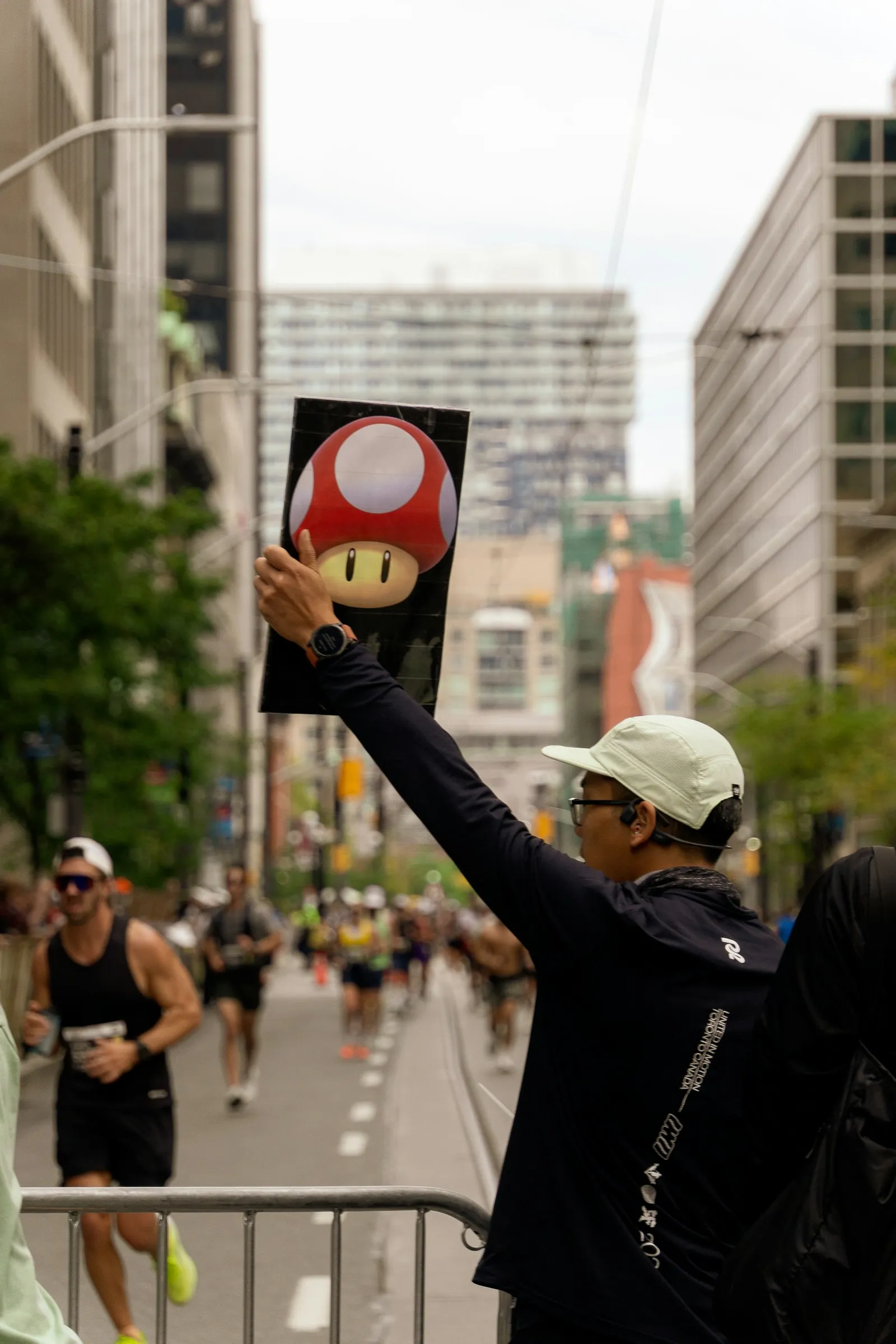
Funny signs
Laughter is the cheapest painkiller on the course. A funny sign gets the runner out of their own head for a moment.
In a hurry?
The classic. Short, and everyone gets it.
Run like you stole something!
Old, and still the one runners point at.
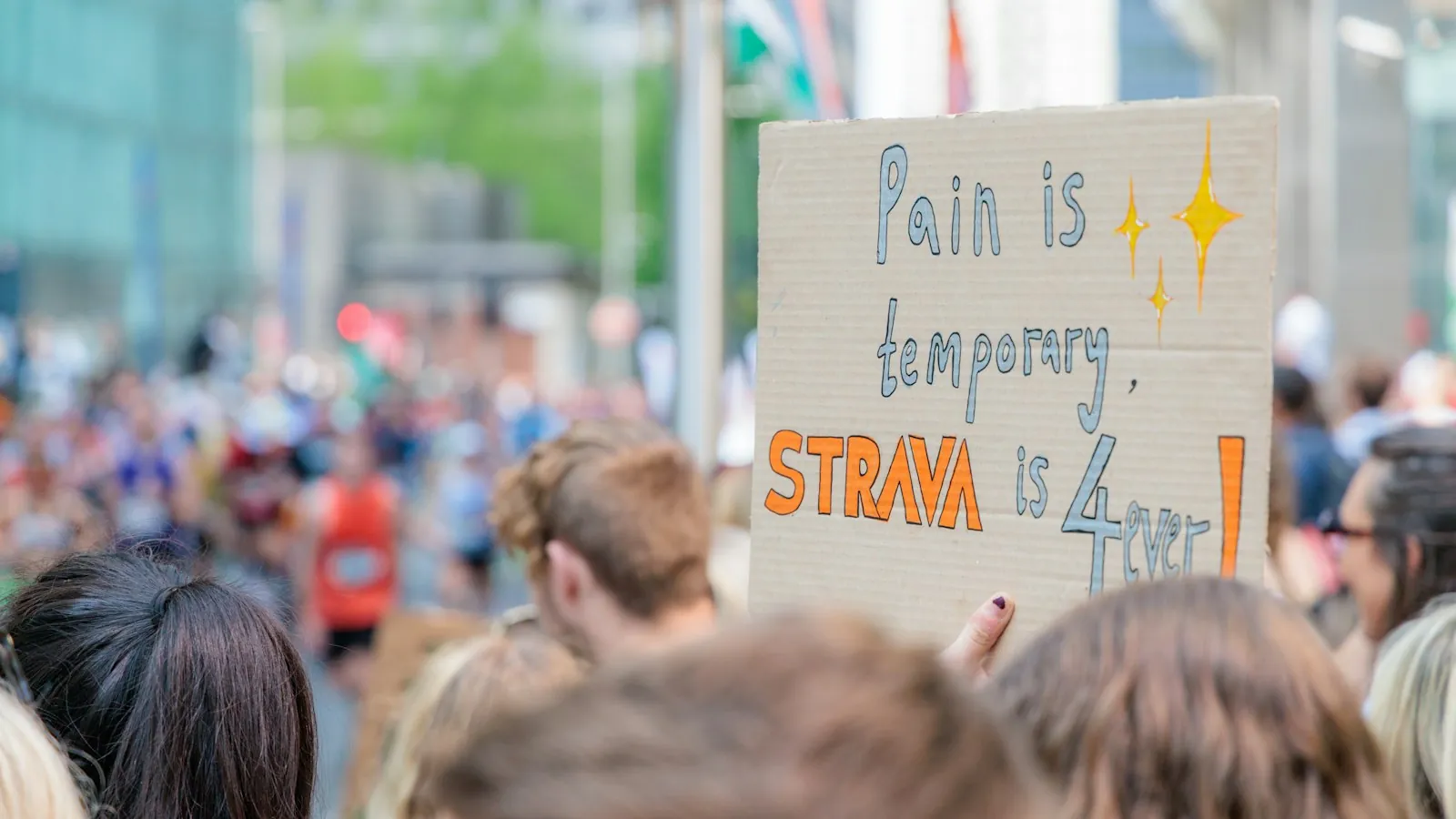
Pain is temporary. Strava is forever.
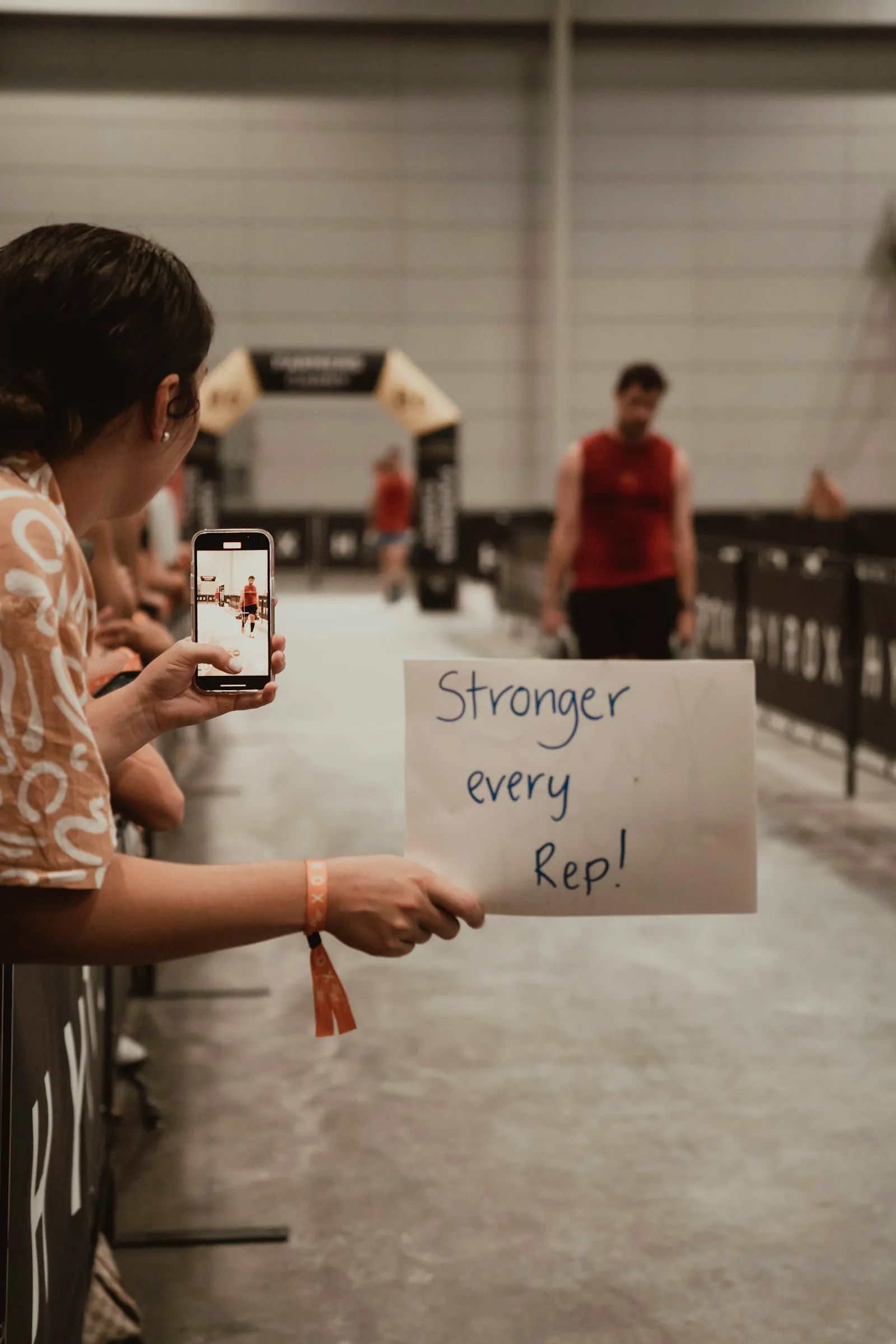
A runners' favourite. It's the sign in the photo at the top, taken at a London marathon.
You're almost there! (no. but you've got this.)
At kilometre 12, "you're almost there" is a lie, and this sign owns up to it.
Toenails are overrated.
Only funny if you run, but runners laugh out loud at it.
The beer at the finish is colder if you hurry.
Works best in the final push, over the last 2 km.
Motivating signs
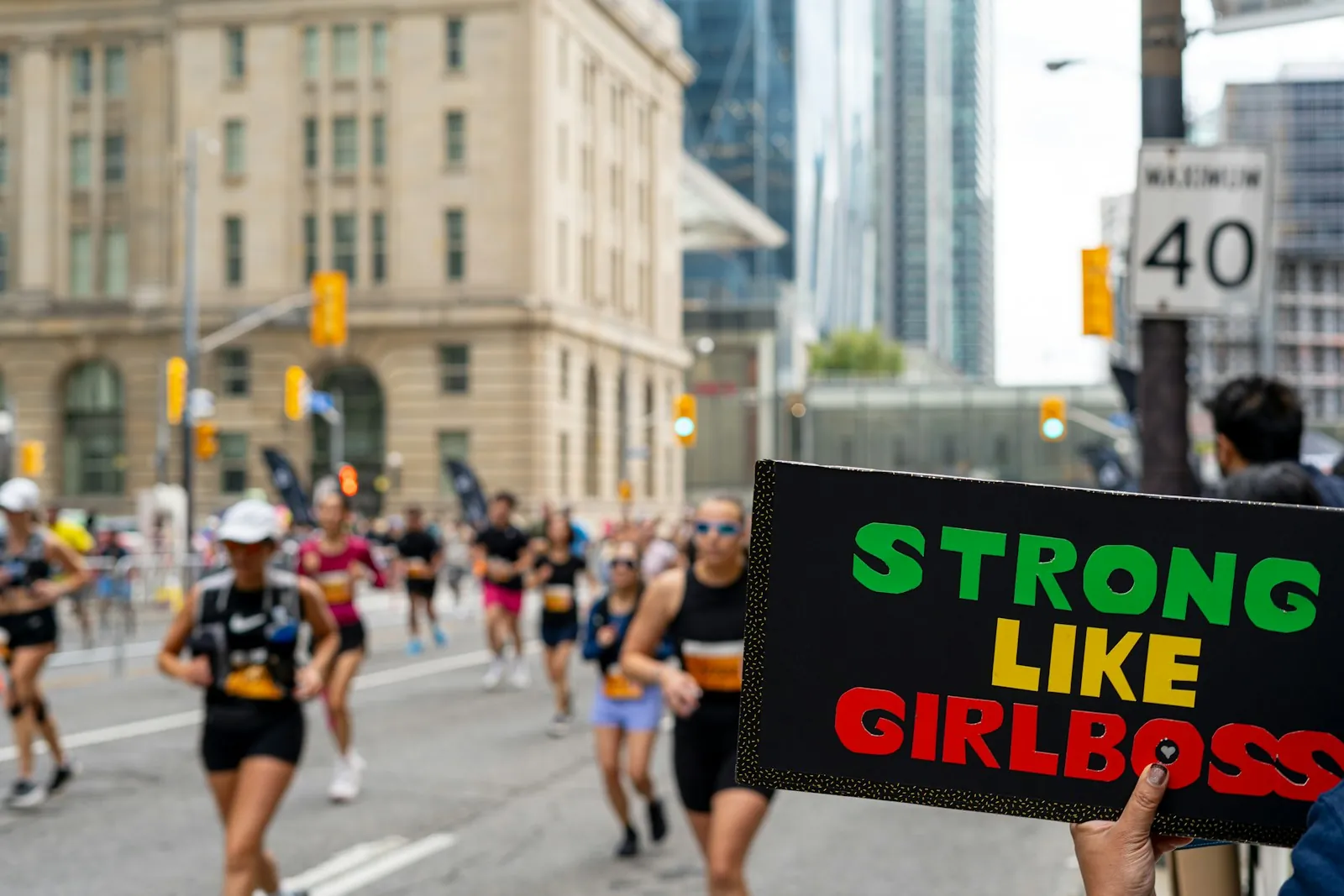
A motivating sign works when it avoids the obvious. There are a thousand "Go!" signs along any course, and these three stand out from them:
I don't know you, but I'm proud of you!
It's aimed at strangers, which is exactly why it lands. Everyone hears their own name in it.
TOUCH HERE → FOR POWER
Draw a big power button next to it. Runners really do touch it, so hold it where they can reach without breaking stride.
If it were easy, I'd be doing it.
Self-deprecating and respectful at the same time. Save it for the hard stretch.
Personal signs
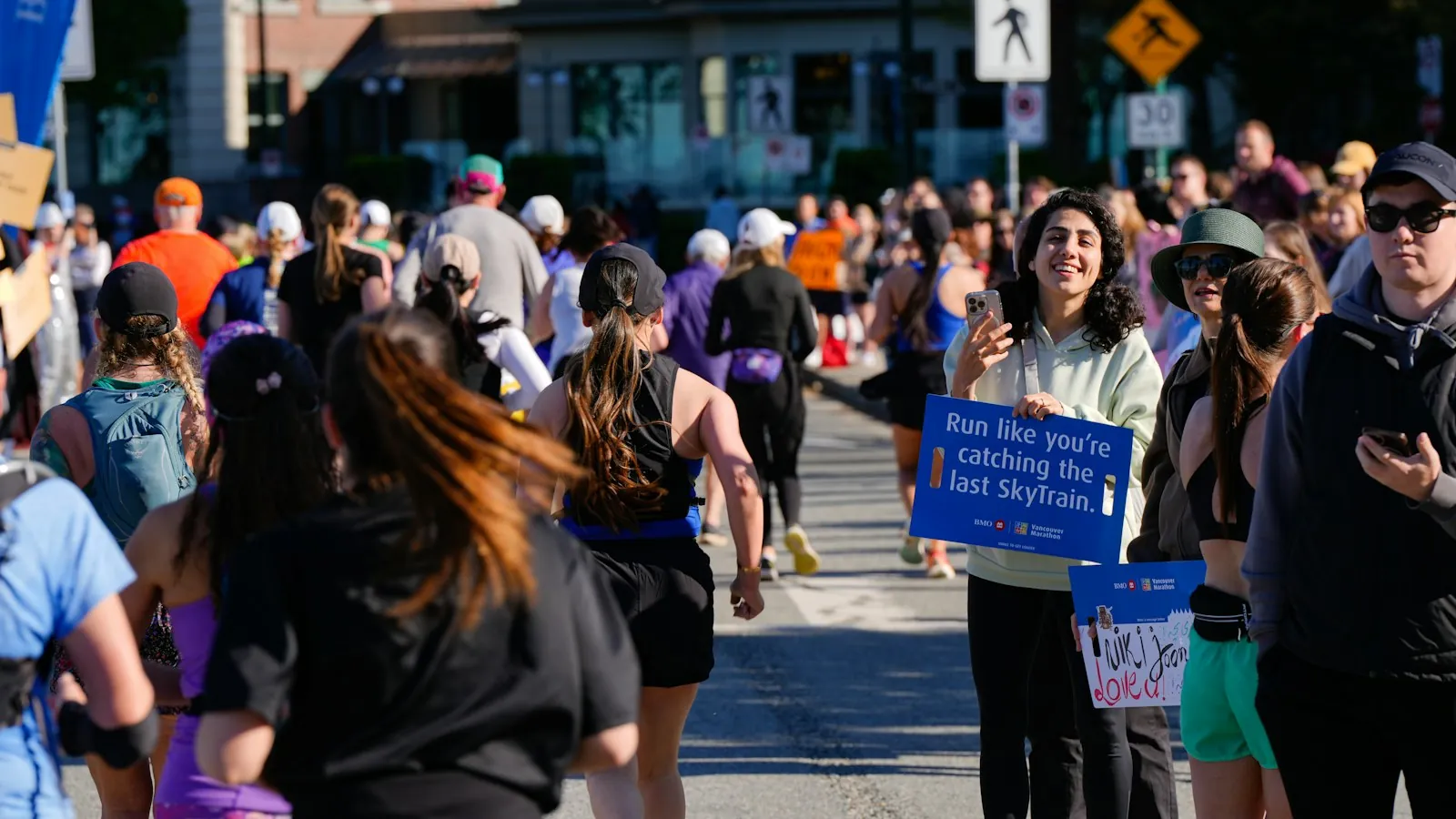
This category beats all the others. A runner can spot their own name from 50 metres in a crowd, so a personal sign speaks straight to them.
MUM, WE'RE HERE! KM 32 ♥
The kids' sign. Let them draw on it; the wobbly letters are the whole point.
Go, Grandpa! We're waiting at the finish.
Two lines: a cheer, and a promise of where you'll meet.
GO, ANNA! We're at km 35!
Name plus kilometre. The runner knows where to look for you, and from km 30 on that keeps them going.
Tip: if your runner's name is on the sign, write their bib number in a corner too. Other runners will shout "Go, Anna!" as well, and racers say that's one of the best feelings on the course.
How big, and what to write it with?
- Size: A2 (42×59 cm) at minimum, and A1 is better. You can't read an A4 sheet from 5 metres.
- Material: thick cardboard (the side of a big box is perfect) or foam board. Paper bends and gets soaked.
- Lettering: capitals at least 10–12 cm tall, in thick marker or poster paint. Thin marker just disappears.
- Contrast: black on white, or black on neon yellow. Coloured letters on a coloured background vanish.
- Word count: 3–7. If a runner can't read it in 2 seconds, they won't read it.
- Handle: tape a wooden lath or two paper-towel tubes to the back. After four hours your hands will thank you.
- Two sides: put a second line on the back. If you pick the right spot, the field passes you more than once.
Where to stand
Signs get read where runners are going slower and getting bored. At the start everyone is buzzing, and in the finishing straight everyone is looking at the finish.
- Around kilometre 30 of a marathon (15–17 km of a half). That's "the wall", where a sign is needed most.
- On climbs and at bridgeheads, where the pace drops and heads come up.
- At turnarounds, because they see you twice.
- Where there's no crowd. One sign on a quiet stretch is worth ten at the finish.
If you're tracking your runner live, you can work out when they'll reach you. For the SPAR Budapest Marathon, here's a guide to where to stand and how to follow.
If you can't be there
A sign gets half a second; your voice gets five. With Cheerlify you record a voice or video message in advance and pick the kilometre, say the 32nd. It plays in the runner's earbuds right there, even if you're on the other side of the world. Supporters don't need an app or an account.
For ideas on what to say, here are 30+ cheers for every stage of the race.
Frequently asked questions
Can I bring the sign into the start area?
Start and finish zones are usually for runners and staff only. Anywhere along the course outside the tape is fair game.
How big a sign can a child carry?
An A3 one with a handle. Write the text yourself in big letters and let them decorate it.
What goes on the back?
The same line or a different one. The most common mistake is leaving the back blank, when half the field sees you from that side.
In the rain?
Foam board, with wide clear tape over the letters. Paper is unreadable within 10 minutes.
Follow your runner live — and be in their ears.
Cheerlify shows your runner's live position on the course map and plays your voice cheers in their earbuds mid-race. Supporters need no app and no sign-up.
Keep reading
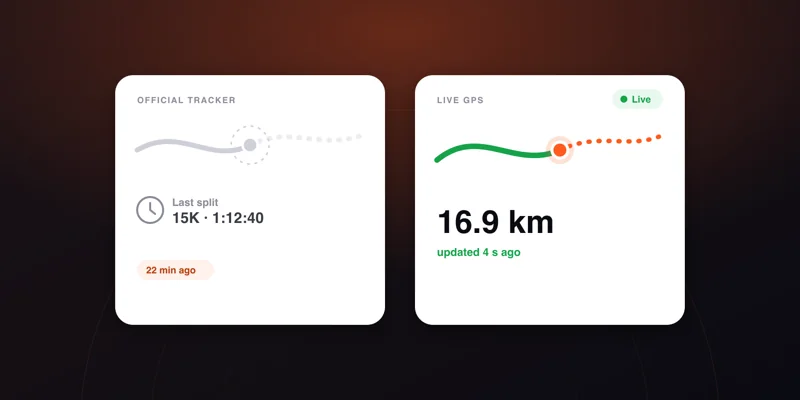
Race tracker not updating: why, and what to do
The dot is frozen, or there has been no split for twenty minutes. The causes from most to least likely, and the point at which it is actually worth worrying.
5 min read →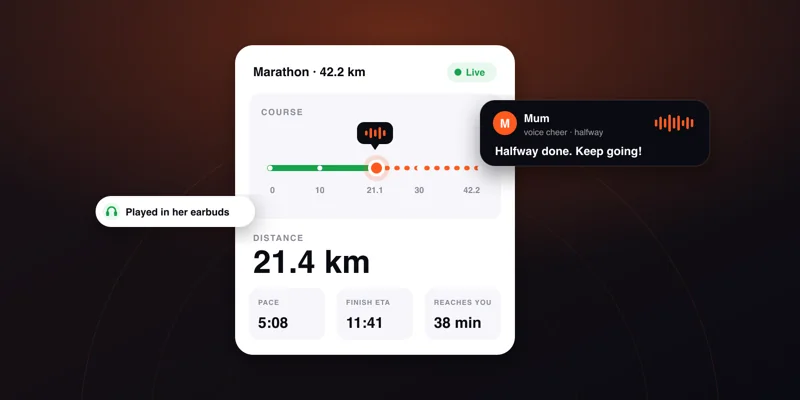
How to track a runner live at a race: the complete guide
Chip splits, GPS tracking, where to stand and what to say. What a spectator can actually see during a marathon, what usually breaks, and the backup plan.
6 min read →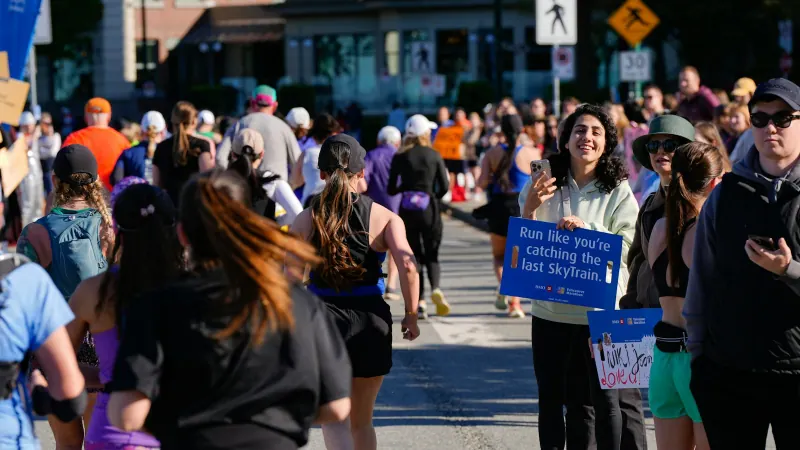
What to say to a runner: 30+ cheers for every stage
The one page to open before you record your first cheer.
2 min read →