Dublin Marathon 2026: tracking, Heartbreak Hill and where to cheer
25 October 2026: the official race tracker, live GPS between the timing mats, the support zones, and how to be in their earbuds on Roebuck Road.
In this article
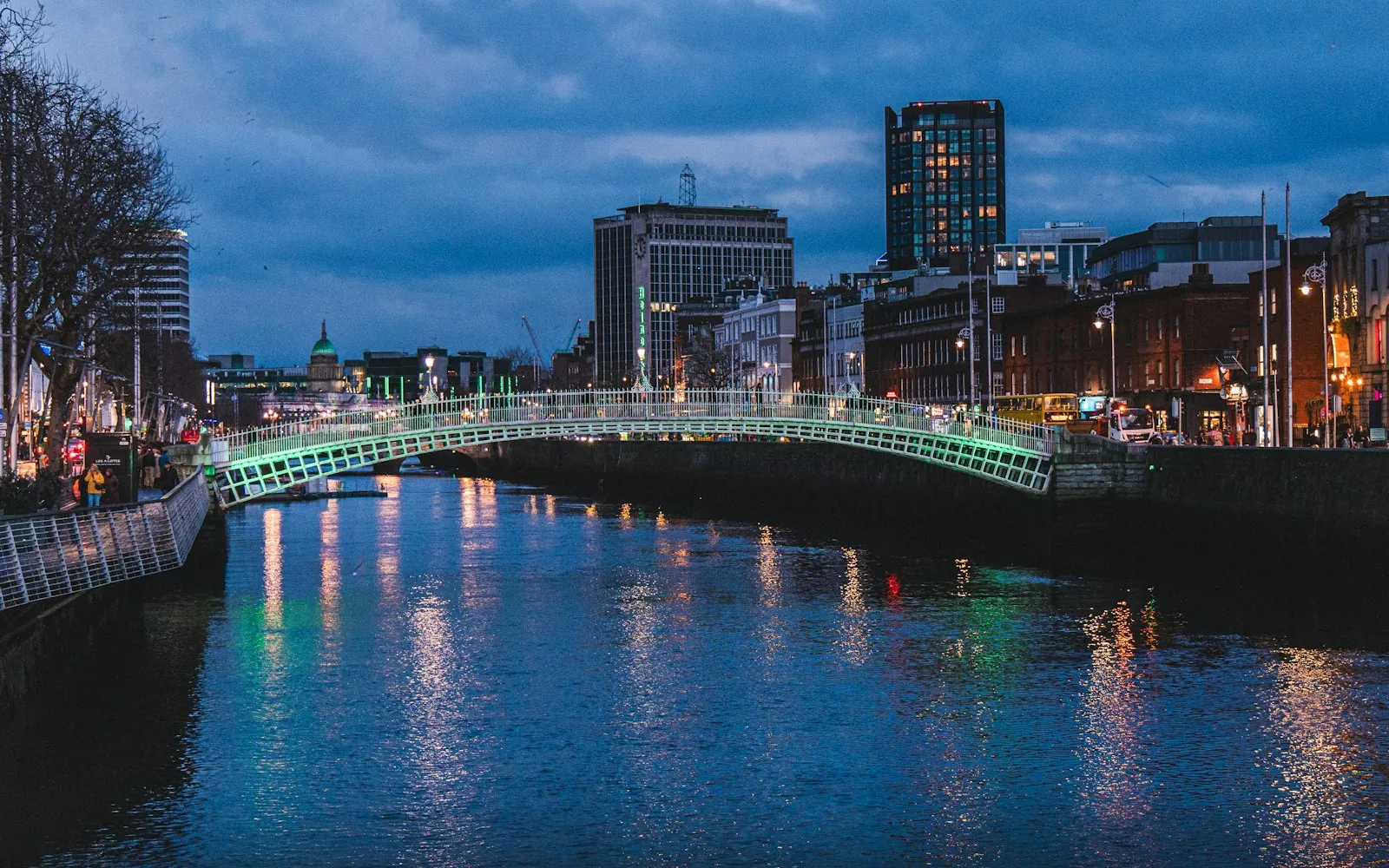
The Irish Life Dublin Marathon runs on Sunday 25 October 2026, from Leeson Street Lower to Mount Street Upper by the Pepper Canister Church (official race-day information). In between, the course crosses the Liffey, loops through the Phoenix Park, swings out through the south-west suburbs and climbs to "Heartbreak Hill" around km 35. If someone you care about is running it, this guide covers how to know where they are right now, and how to get your voice to them at the moment they need it most.
Independence notice: Cheerlify is an independent service. It is not affiliated with the Irish Life Dublin Marathon organisers or sponsors, and it is not the event's official application.
The race at a glance
| Date | Sunday 25 October 2026 |
| Start | Leeson Street Lower: wheelchair start 8:40, Wave 1 8:45, Wave 2 9:05, Wave 3 9:25, Wave 4 9:45 |
| Finish | Mount Street Upper, by the Pepper Canister Church |
| Time limit | the course closes after 7 hours |
| Race number pick-up | Expo at the RDS Simmonscourt: Fri 23 October 12:00–19:00, Sat 24 October 9:00–18:00; none on race day |
| Field | 22,500 entries |
The wave times come from the race-day instructions, which say they may change. Runners were emailed their wave allocation in early October.
Mind the clocks: summer time ends in the early hours of race day (2:00 becomes 1:00). Make sure your runner's alarm and yours are on the new time. If you're following from continental Europe, Dublin is one hour behind you; from the UK, it's the same time.
1. Official tracking: the race tracker, mat by mat
The timing chip is on the back of the race number. Chip timing mats are at the start, 10K, halfway, 30K, 40K and the finish (race-day instructions). On race day the organisers point supporters to the official race tracker at track.rtrt.me, and race progress and results also appear at tdleventservices.co.uk (race-day information). Look your runner up by name or race number, ideally before Sunday.
Worth knowing:
- It updates at the timing mats. Between 10K and halfway, or between 30K and 40K, there's roughly an hour at most runners' pace, and in between you only see the last split. It won't tell you whether your runner is on Roebuck Road right now or already past RTÉ. Every chip system works this way; more here: chip timing vs GPS tracking.
- It's accurate and official. At the mats the chip reading is the most precise data there is, and it becomes the official split and finish time.
- The waves start up to an hour apart. The race clock means little for a Wave 4 runner. Go by their own split, and know which wave they're in.
2. Live GPS on the map, between the mats
The long stretches between two mats are covered by GPS tracking from the runner's own phone: Strava Beacon, Garmin LiveTrack, plain location sharing or Cheerlify. We compared them here: marathon tracking apps compared. Cheerlify snaps the dot to the course, so you see which kilometre they're on and get an arrival estimate for any point. In Dublin that tells you whether you can still make it from Terenure to Merrion Road before they do.
Tip: use both. At the mats the chip data is exact; GPS fills the hour in between.
The course, stage by stage
From the organisers' course description, course map and the mile markers of the official support zones, converted to kilometres, so treat them as approximate:
| km | Where |
|---|---|
| 0 | Leeson Street Lower (start), downhill to St Stephen's Green |
| 1–3 | the Liberties, St Patrick's Cathedral, a first climb on Patrick Street to Christchurch, then down to the Liffey and across to the Northside |
| 6–14 | Phoenix Park: Dublin Zoo, Chesterfield Avenue, the Phoenix Monument (about km 8), a loop out to Castleknock (about km 11), back in at Knockmaroon Gate |
| 16–19 | down to Chapelizod (about km 16), Inchicore, Kilmainham (about km 18.5) |
| 20–24 | Dolphin's Barn and the Crumlin Road around halfway, out to Walkinstown (about km 24) |
| 27–30 | Cromwellsfort and Fortfield Roads, then down Templeogue Road into Terenure |
| 30–35 | Dartry Road, up Milltown Road, then about 3 km of climbing on Clonskeagh and Roebuck Road ("Heartbreak Hill", around km 35) |
| 35–38 | down Foster's Avenue, Stillorgan Road, Nutley Lane by RTÉ (about km 38) |
| 38–42 | Merrion Road past the RDS, Northumberland Road, the final mile to Mount Street Upper (finish) |
The course is marked in miles and every 5K. The first half is gentle, the park included. The race is decided between km 30 and 35: after Milltown the road climbs for about three kilometres, and the organisers call the hill around km 35 the toughest challenge on the course. For most runners, that is about where the wall arrives too.
Where to watch
The organisers publish a list of official support zones (race-day information). A selection, with their mile markers and the kilometre:
- O'Donovan Rossa Bridge / Wood Quay (mile 2, about km 3): close to the start, easy to reach from the city centre.
- Phoenix Park: the Phoenix Monument (mile 5, about km 8) and Furze Road (mile 8.3, about km 13). There is also a sensory-friendly zone in the park.
- Kilmainham, opposite the Hilton (mile 11.5, about km 18.5).
- Walkinstown, the Kestrel (mile 15, about km 24), with a cheer zone and a DJ.
- Terenure Village (mile 17, about km 27).
- Milltown, opposite the Dropping Well (mile 19, about km 31).
- Roebuck Road and Foster's Avenue (mile 21.5, about km 35): the hill, and the top of it. Between miles 21 and 22 there's also a music zone.
- Nutley Lane / Merrion Road (mile 24, about km 38.5) and Northumberland Road (mile 25.3, about km 40.5).
- The finish: viewing points on Herbert Street (southside) and around Stephen's Lane, Power's Court and Mount Street Crescent (northside). Afterwards, meet at the post-race meeting area next to the baggage areas at Lincoln Place. Don't wait at the finish line; you can't meet there.
If you can't travel, you miss nothing at home: GPS tracking and voice cheers work the same from anywhere.
Weather
Late October in Dublin is usually cool, and wind and showers are common. If you'll stand on the roadside for hours, wear layers and a waterproof, and check Met Éireann's forecast on Saturday.
Be in their ears on Heartbreak Hill
After Milltown the road starts to climb and doesn't stop for about three kilometres. It's the point where the legs have done 30 km and the head starts negotiating.
With Cheerlify you record a voice or video message in advance, pick the kilometre, and it plays in the runner's earbuds right there. Their music dips, your voice comes in, and the music comes back. Good spots:
- km 33, on Clonskeagh Road: "This is the hill you trained for. Short steps, it ends soon."
- km 36, Foster's Avenue: "That's Heartbreak Hill done. Downhill now, and then home."
- km 41, Northumberland Road: something only you can say to them.
A word on earphones: the organisers strongly advise against wearing them, so runners can hear stewards and safety warnings (race-day instructions). If your runner wants to hear your cheers, open-ear headphones or a single earbud at low volume keep their ears free, and the cheer comes through clearly.
For the runner: in the Cheerlify app, pick Irish Life Dublin Marathon from the race catalog. The official course is already loaded, so you don't need a GPX file. Share the link and the code with your supporters.
Supporters don't need an app or an account: a link and a code in the browser. If there are several of you, everyone can record their own for a different kilometre. Not sure what to say? Here are 30+ cheering lines for every stage of a race.
Race-week checklist for supporters
- Your runner's race number and wave saved. Wave 1 starts at 8:45, Wave 4 at 9:45. Your runner looked up in the official race tracker.
- Clocks go back one hour in the early hours of 25 October.
- Your runner has sent you their GPS tracking link, and you tested it on Friday or Saturday at the expo.
- Their phone starts fully charged, battery saver off, location permission set to "Always". Under trees or between tall buildings the dot can wobble for a moment; that's normal.
- Cheers recorded: at least one for the climb (km 31–35) and one for the final mile.
- If you're there: you've picked your spot, you know how to get there with the roads closed (road closures), and you've agreed to meet at the post-race meeting area at Lincoln Place.
Frequently asked questions
How can I track a runner at the Dublin Marathon?
With the official race tracker (track.rtrt.me): look them up by name or race number and see their splits at the start, 10K, halfway, 30K, 40K and the finish. Between the mats, GPS tracking from the runner's phone shows where they are in real time.
What time does the Dublin Marathon 2026 start?
On Sunday 25 October 2026 from Leeson Street Lower: the wheelchair start at 8:40, then Wave 1 at 8:45, Wave 2 at 9:05, Wave 3 at 9:25 and Wave 4 at 9:45.
Where is the finish?
On Mount Street Upper, by the Pepper Canister Church. The post-race meeting area is next to the baggage areas at Lincoln Place.
Where is the best place to watch?
The official support zones: the Phoenix Park (miles 5–8), Kilmainham, Walkinstown, Terenure, Milltown, Roebuck Road and Foster's Avenue (mile 21.5, Heartbreak Hill), Nutley Lane and Northumberland Road, plus the finish viewing points on Herbert Street and around Mount Street Crescent.
What is the time limit?
The course closes after 7 hours.
Can I follow from another country?
Yes. GPS tracking shows your runner on the map in real time from anywhere, and your recorded cheers play in their earbuds just the same.
Follow your runner live — and be in their ears.
Cheerlify shows your runner's live position on the course map and plays your voice cheers in their earbuds mid-race. Supporters need no app and no sign-up.
Keep reading

Frankfurt Marathon 2026: tracking, the Mainzer Landstraße and the Festhalle finish
25 October 2026: official tracking with timing at every km, live GPS, where to watch twice in the city centre, and a voice cheer at km 31.
9 min read →
Venice Marathon 2026: tracking, the Ponte della Libertà and the 14 bridges
25 October 2026, Stra to Venice: official chip tracking and live GPS, the 4 km bridge, and how to be in their earbuds at km 34.
9 min read →
What to say to a runner: 30+ cheers for every stage
The one page to open before you record your first cheer.
2 min read →